
Pork Recipes Worth Making for Creamy Comfort
Search for recipes for cheesy, smoky, and spicy pork dishes and other recipes that include a crisp finish. Recipes featured on these sites include bratwurst and bacon spaghetti, chorizo potato soup, slow cooker pork, Chinese-style pork belly, and garlic Parmesan bacon spaghetti with tomatoes.
Why These Pork Recipes Work
- Rich Favorites: Cheese-and-spaghetti dishes and tomato-and-Parmesan dishes and potato soup are other rich options besides smoked and seasoned pork dishes.
- Bold or Mild: Smoked chorizo and five-spice pork belly are bold options. Slow-cooked tenderloin is a mild, buttery option.
- Texture Contrast: Crispy bacon and pork rinds add texture contrast to other soft foods served at the meal, such as cooked noodles, creamy sauces, and mashed potatoes.
- Different Recipes: This book offers recipes for stovetop dishes such as pasta and soup and for slow cookers that require no cooking, as well as a recipe for baked pork belly. It has recipes for cooks with different preferences.
1. German Spaghetti with Bratwurst, Bacon, and Creamy Cheddar Sauce
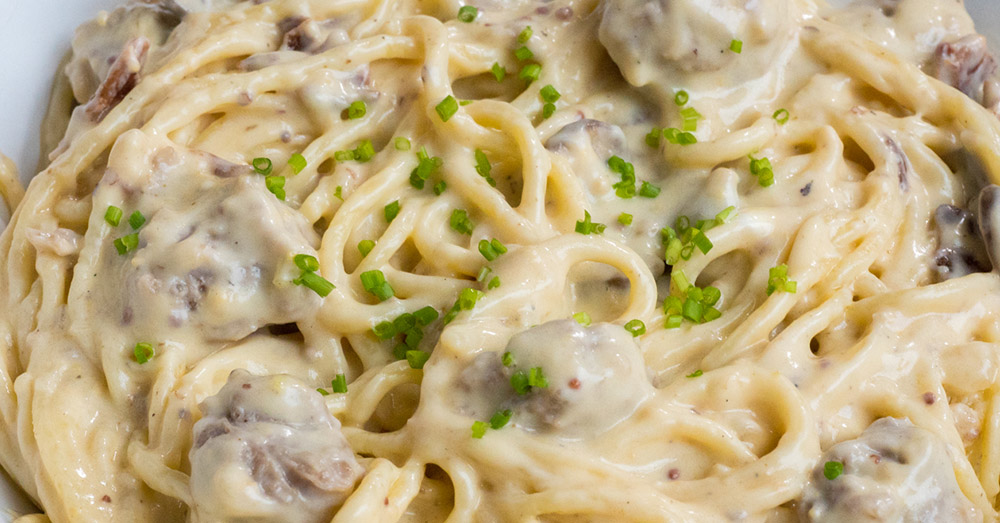
On spaghetti night, German Spaghetti includes crispy bacon and sliced bratwurst, mushrooms, and German beer in a cheddar-spaghetti sauce. Stoneground mustard and apple cider vinegar add brightness to balance the rich meat flavors in the pasta sauce. Chopped fresh chives are sprinkled over each serving of spaghetti for additional flavor and color. Pasta is prepared in one pan. Bacon is fried in a second pan to produce bacon grease and fried bratwurst and other vegetables, such as onions and mushrooms, in the same pan. German beer is deglazed in the same pan. A roux is made in a third pan with butter and flour, and milk is added slowly. Cheddar cheese, German stone-ground mustard, vinegar, and sour cream are added to the pan sauce and combined with cooked pasta. Look for onions and mushrooms to cook down before adding beer. The leftover cooked beer amount will be about 1/4 cup. The cooked milk mixture will be thick and ready when you can stir in cheese at the end of cooking. Possible issues: The mixture may thicken too much when combined with pasta. Reserve pasta cooking water to help with this. Serve it with chives and hot pasta to make it easier to eat. This dish is a complete meal. Any leftover pasta will become firmer when cooled in the refrigerator. Reheat leftover pasta with pasta cooking liquid only if you saved some.
2. Spanish Potato Soup with Chorizo: Creamy Potatoes and Smoky Paprika

Browning chorizo with oil infuses the oil with a smoky paprika flavor from the chorizo, which can enhance the flavors of other ingredients in the soup. One Spanish potato soup recipe uses waxy potatoes, bell pepper, and cream with a smoky flavor. Spanish chorizo and finely chopped yellow onion, garlic, carrot, and green pepper are cooked in stages and mixed with spices and other ingredients, including cumin, oregano, sweet paprika, cayenne pepper, tomato paste, and flour. Waxy potatoes are used in this recipe because they hold their shape when sliced. Chicken broth is used as the soup base, and heavy cream is added for flavor and richness. After boiling the broth, loosely cover the pot and simmer over medium-low heat until the potatoes are cooked. Potatoes should be soft enough to easily pierce with a fork but not fall apart in the pot. The final soup will not have any whole potato chunks if the potatoes cook too quickly or are particularly easy to cook. Add chopped parsley to the cream at the end of preparation. Serve with crusty bread. The soup can be made ahead and refrigerated, covered tightly, for up to 3 days or frozen for up to 3 months.
3. Creamy Bacon Pasta with Garlic, Parmesan, and Cherry Tomatoes
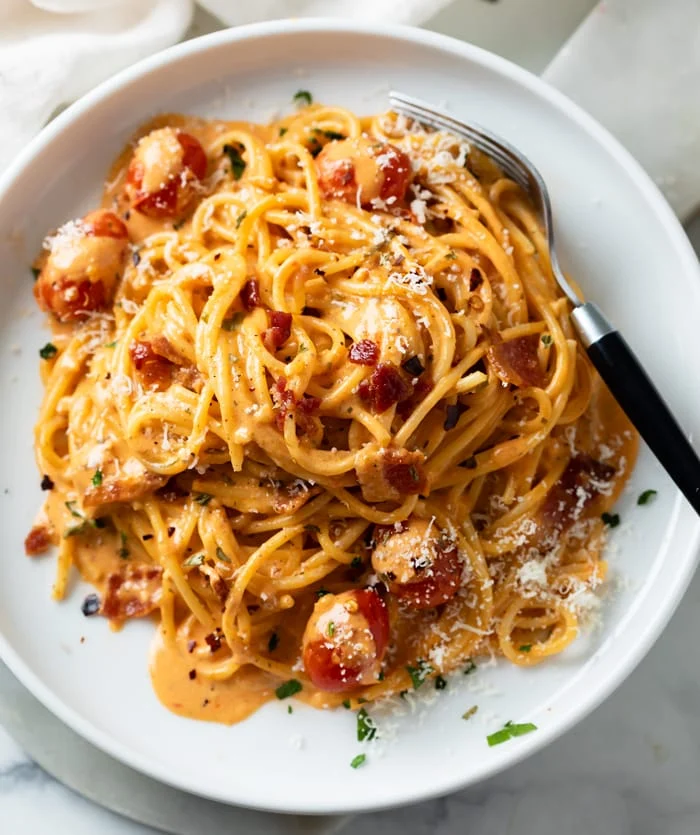
Choose bacon that will cook quickly and release extra fat and flavor when sautéed. The smoky flavor of bacon can enhance the flavors of this pasta dish. Spaghetti is tossed with tomato cream sauce, garlic, fresh cherry tomatoes, Parmesan cheese, and a touch of red pepper flavor. Low and slow bacon cooking yields bacon bits and a tablespoon of bacon grease for cooking garlic. Broth is added a few tablespoons at a time to deglaze the pan. Tomato paste and cream are added with oregano, basil, mustard powder, onion powder, and pepper to create a sauce. Room-temperature cream cheese is added to the sauce and mixed in. Fresh Parmesan cheese is topped on the dish. As the sauce simmers, partly covered, cherry tomatoes will soften, showing that they are contributing liquid to the sauce. Boil the spaghetti for 1 minute less than the package recommends. Lower the sauce's heat before adding Parmesan cheese. Overheating the cheese base will result in curdling and an unpleasant texture. Adding hot spaghetti to the same pot as the sauce will help it absorb the sauce as it thickens. Top with crushed bacon and parsley. Serve with Garlic Bread with Cheese as instructed. Leftover sauce will reduce slightly when refrigerated or frozen. Use less than half a pound of noodles to avoid excess sauce. The recipe developer recommends airtight containers for refrigerating or freezing leftovers.
4. Crockpot Pork Tenderloin with Smoky Brown Sugar Spice Rub
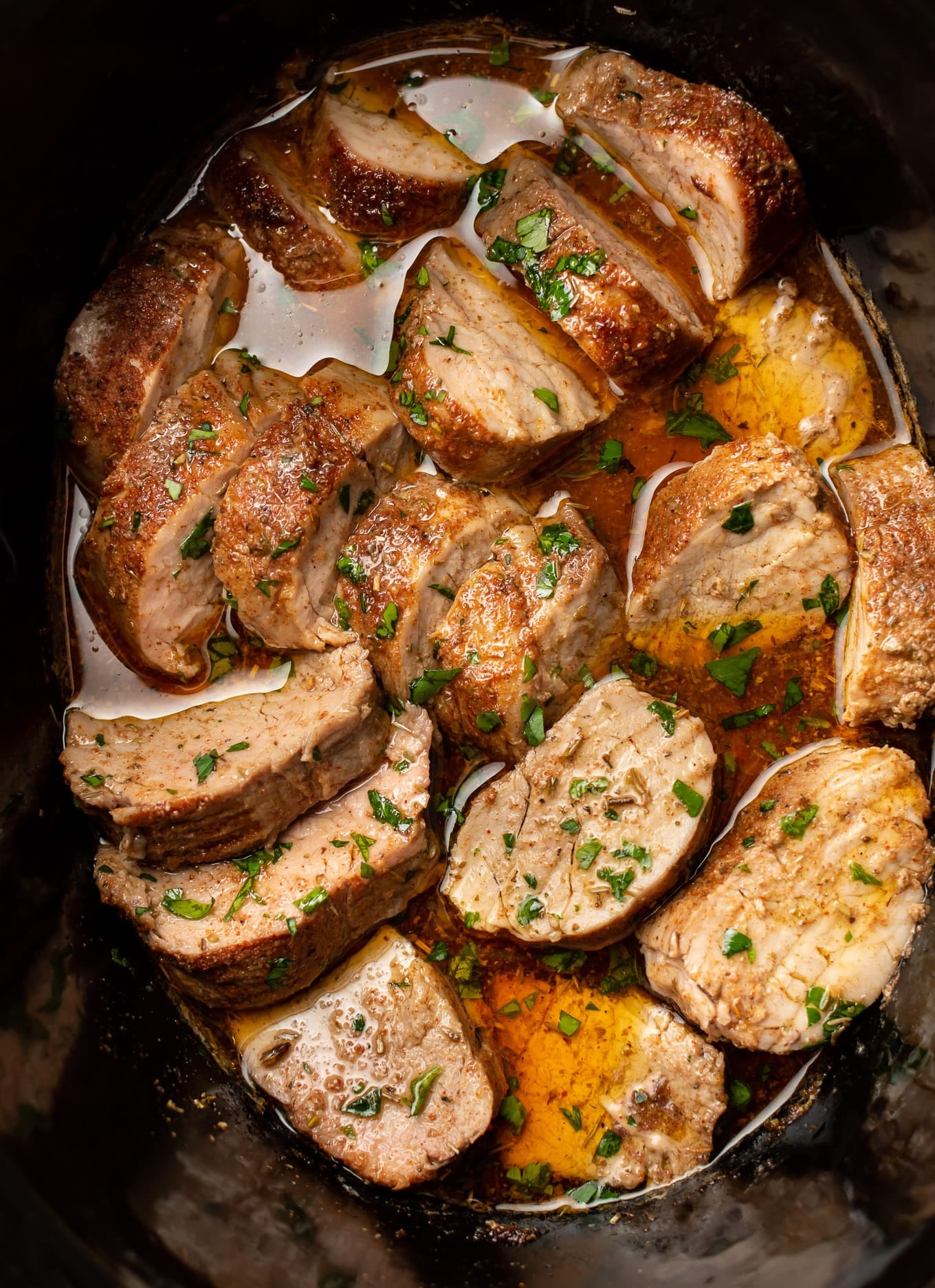
Gentle heat in a slow cooker can cook a pork tenderloin without browning it. Cooking liquid ingredients include butter and broth for serving with sliced pork tenderloin. Letting the pork tenderloin rest for a few minutes before slicing helps retain moisture. Brown sugar rub adds smoky and sweet notes to slices of pork tenderloin. Two one-pound tenderloin steaks are trimmed and seasoned with brown sugar, smoked paprika, garlic and onion powders, chili powder, Italian seasoning, salt, and pepper. Beef broth is poured into the slow cooker to enhance flavor and provide moisture. Butter pats are placed on and around the tenderloin steaks in the slow cooker to enhance the juices. Rub leftover on the plate is added to the slow cooker. The best way to check the doneness of tenderloin is by its internal temperature in the thickest part of the meat. For tenderloin cooked in a slow cooker, begin checking doneness at two hours after starting to cook low-temperature tenderloin and one hour after starting to cook high-temperature tenderloin in a slow cooker. Times vary for slow cookers. Because tenderloin cooks quickly, do not rely on the clock alone to check for doneness in tenderloin. You may need to check larger tenderloins more often toward the end of the cooking time. Let the pork sit for five minutes. Slice it into medallions and put it back in the pan or serve the sauce on the side. Garnish with chopped parsley, if desired. Other side dishes include mashed potatoes, butter rice, or baked potatoes with vegetables or salad.
5. Chinese Roast Pork Belly With Five-Spice Rub and Crackled Skin
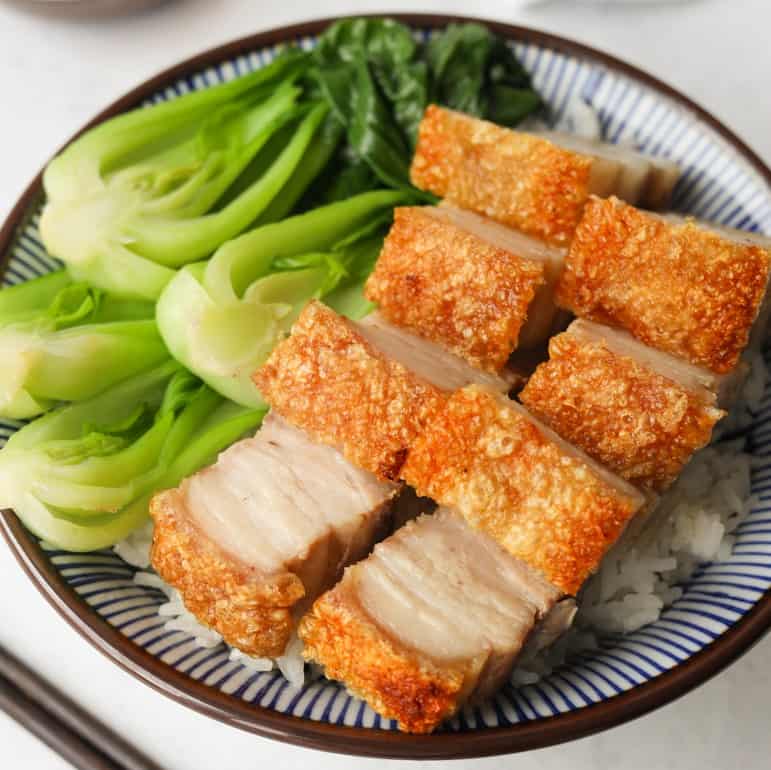
Low cooking temperatures brown and dry the seasoned skin on a pork belly. Higher cooking temperatures crisp the scored skin. Aluminum foil on the sides helps prevent the seasoning from burning. Siu yook, a popular Chinese dish, is made of pork belly that is topped with browned, crispy skin and contains some fat as well as lean meat. The five-spice and garlic powder and salt rub is applied to the meat side to avoid getting the seasoning on the skin side, which must stay dry. The skin side is brushed with vinegar and salt to dry the exposed skin surface during the first cooking period. Oil is added to the skin surface during the final cooking period to promote browning and crisping of the skin. The meat is packed in a foil container to redistribute juices after cooking and to keep the top surface of the meat exposed. Small crosshatches should not cut deeply into the meat without cutting it. Meat skin left to dry for 60 minutes at 225°F should be dry and slightly hard. Broil at 500°F until brown and crispy. Tips and warnings about this process include foil barriers, wet meat skin, and not covering meat during broiling, all of which can interfere with browning. Foil barriers can help prevent overbrowning in some areas to promote browning and crisping in other areas. Do not overbrown any areas to avoid losing flavorful juices when slicing the meat. Slice the meat back and forth with a knife, then make a decisive cut through the skin to further separate the meat. The hoisin and vinegar mixture can be eaten with rice, other vegetables, noodles, or buns. Ways to use leftover pork include incorporating it into fried rice, soups, and other noodle dishes for additional flavor and fat. Other ideas for leftover pork include making baos with hoisin sauce and pickled vegetables.